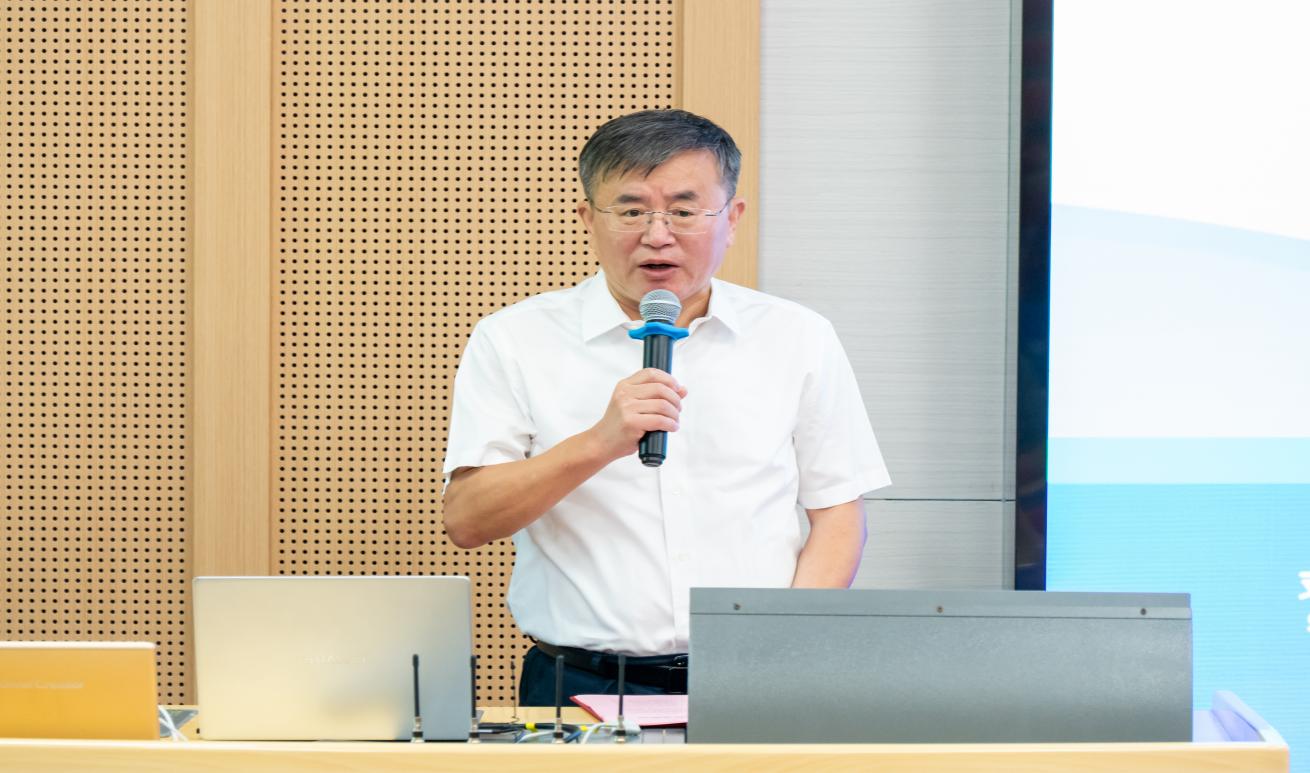
Amid the balmy midsummer breeze and fragrant lotus blooms, the opening ceremony of the 2026 Summer Camp jointly hosted by Beijing University of Chemical Technology (BUCT) and the Confucius Institute at the University of Miskolc, Hungary, unfolded ceremoniously on the Changping Campus on the morning of June 22. Endorsed by the Center for Language Education and Cooperation (CLEC) as a flagship inbound exchange program under the Chinese Bridge initiative, this summer camp welcomes thirteen young students from the Confucius Institute of the University of Miskolc, accompanied by their Hungarian supervisor Ms. Amy throughout the program.Vice President Wang Feng of BUCT graced the ceremony and delivered an address. Also present at the event were Zhang Bing, Director of the International Exchange and Cooperation Office; Zheng Xiuying, Party Secretary of the School of Humanities and Law; Li Xinliang, Deputy Director of the North Campus Administration Office; Hou Hong, Deputy Director of the Academic Affairs Office; Xiang Weixi, Deputy Director of the Security Office; Yan Hong, Vice Dean (in charge of daily operations) of the International Education College; Yu Yue, another Vice Dean of the International Education College, alongside faculty representatives and participating students. The opening ceremony was presided over by Yu Yue.
On behalf of all faculty and students of BUCT, Vice President Wang Feng extended a warm welcome to the Hungarian delegation. He elaborated that BUCT has long upheld an open philosophy of schooling dedicated to integrating Chinese and global perspectives in its international development, consistently advancing pragmatic collaboration with higher education institutions along the Belt and Road Initiative, and fostering a diverse, inclusive international educational ecosystem. Serving as a pivotal vehicle for strategic cooperation between the two universities, the Confucius Institute of BUCT and the University of Miskolc has devoted years to international Chinese language education and people-to-people cultural exchanges between China and Hungary. Following last year’s successful Confucius Institute Summer Camp, this year’s event marks another milestone for the university to promote Chinese language globally and deepen educational and cultural ties between China and Hungary. He urged all camp participants to cherish this precious opportunity of studying in China, immerse themselves in the elegance of the Chinese language and the profound charm of Chinese culture, broaden their global horizons through learning and communication, nurture lasting friendship, and emerge as youthful ambassadors of Sino-Hungarian amity.
Yan Hong offered a comprehensive overview of BUCT’s profound academic heritage, distinctive disciplinary strengths, faculty development and landmark achievements in internationalization, before systematically unpacking the summer camp’s agenda, curriculum framework, faculty lineup and signature cultural activities. She noted that themed Immersive Chinese Learning, Inheritance of Shared Cultural Lineages, this year’s summer camp integrates language acquisition and cultural immersion seamlessly, constructing an all-encompassing training system that blends classroom instruction, hands-on cultural practice and urban cultural excursions.Drawing on BUCT’s premium Chinese language teaching resources, the program is staffed by seasoned specialized instructors to systematically elevate students’ comprehensive Chinese proficiency. Beyond language lessons, the camp features immersive workshops on traditional Chinese arts including calligraphy, ink wash painting, Tai Chi and ceramic craftsmanship. Participants will also embark on guided field trips to iconic cultural landmarks such as the Great Wall, the Palace Museum and the Summer Palace. Through immersive, experiential and interactive learning, overseas students gain intuitive insight into the profound heritage and contemporary allure of fine traditional Chinese culture. With language as a bridge and culture as a medium, the camp solidifies the emotional bond of mutual affinity among young Chinese and Hungarian people.
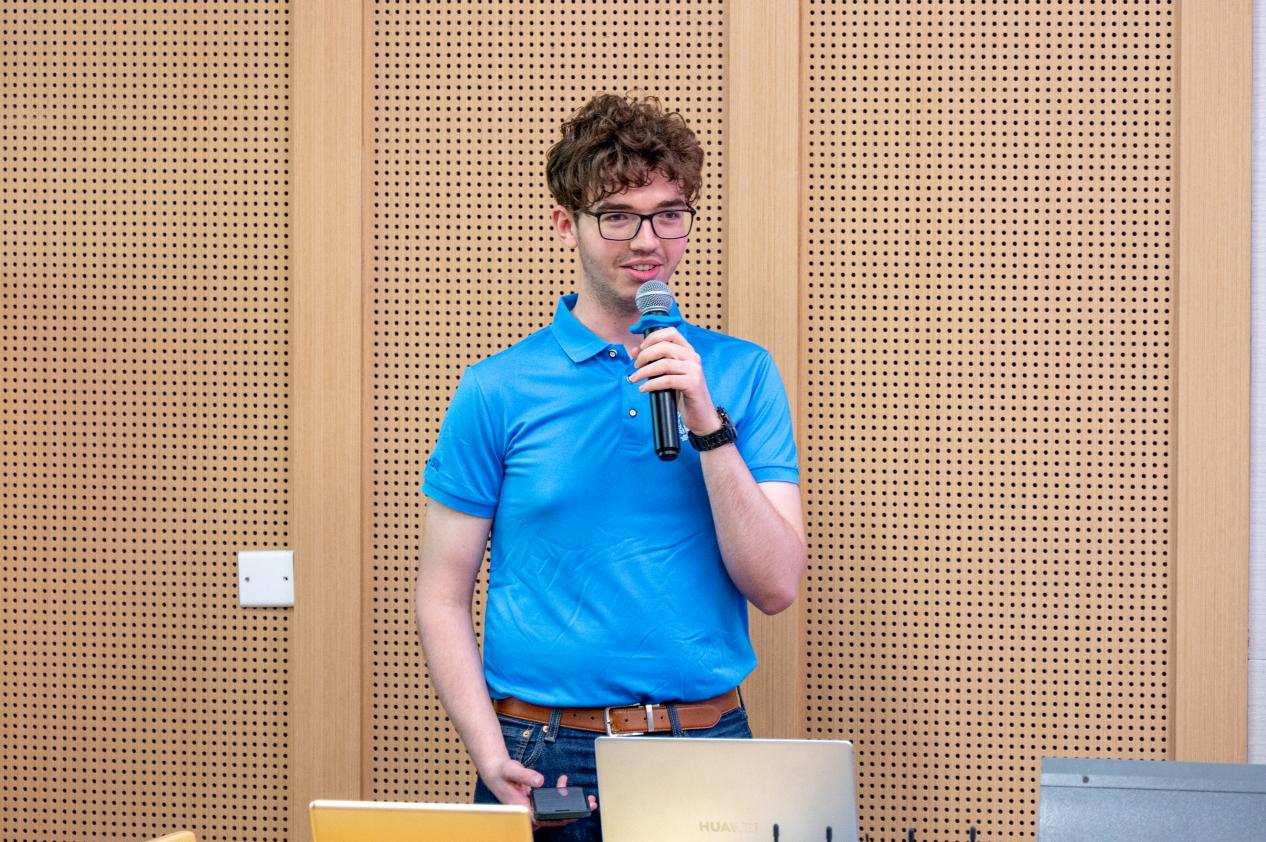
Sallai Dominik, a Hungarian camp participant, delivered a speech of gratitude. He expressed sincere appreciation for BUCT’s meticulous planning and arrangements, and fully acknowledged the invaluable role the bilateral Confucius Institute has played in Chinese language promotion, cultural dissemination and youth exchange. He remarked that this summer camp creates an unparalleled platform for Hungarian youth to engage with an authentic, multi-faceted and comprehensive vision of China. Moving forward, he pledged to devote himself fully to coursework and cultural practice, engage proactively in cross-cultural dialogue, and faithfully carry forward the voice of Sino-Hungarian friendship.
Subsequent to the opening ceremony, Teacher Li Rui delivered a comprehensive safety orientation for all campers, elaborating on campus regulations, travel protocols, activity safety guidelines and daily precautions. The briefing equips students to adapt swiftly to campus life and lays a robust safety foundation for their entire study tour. On the same day, campers toured the Changping Campus, visiting the library and intelligent teaching facilities. The university’s state-of-the-art educational infrastructure, elegant and well-kept campus landscape, and vibrant academic ethos left a profound impression on the Hungarian students. Many paused to capture photos and exchange reflections, brimming with eager anticipation for the upcoming Chinese language classes, cultural experiences and exchange activities.
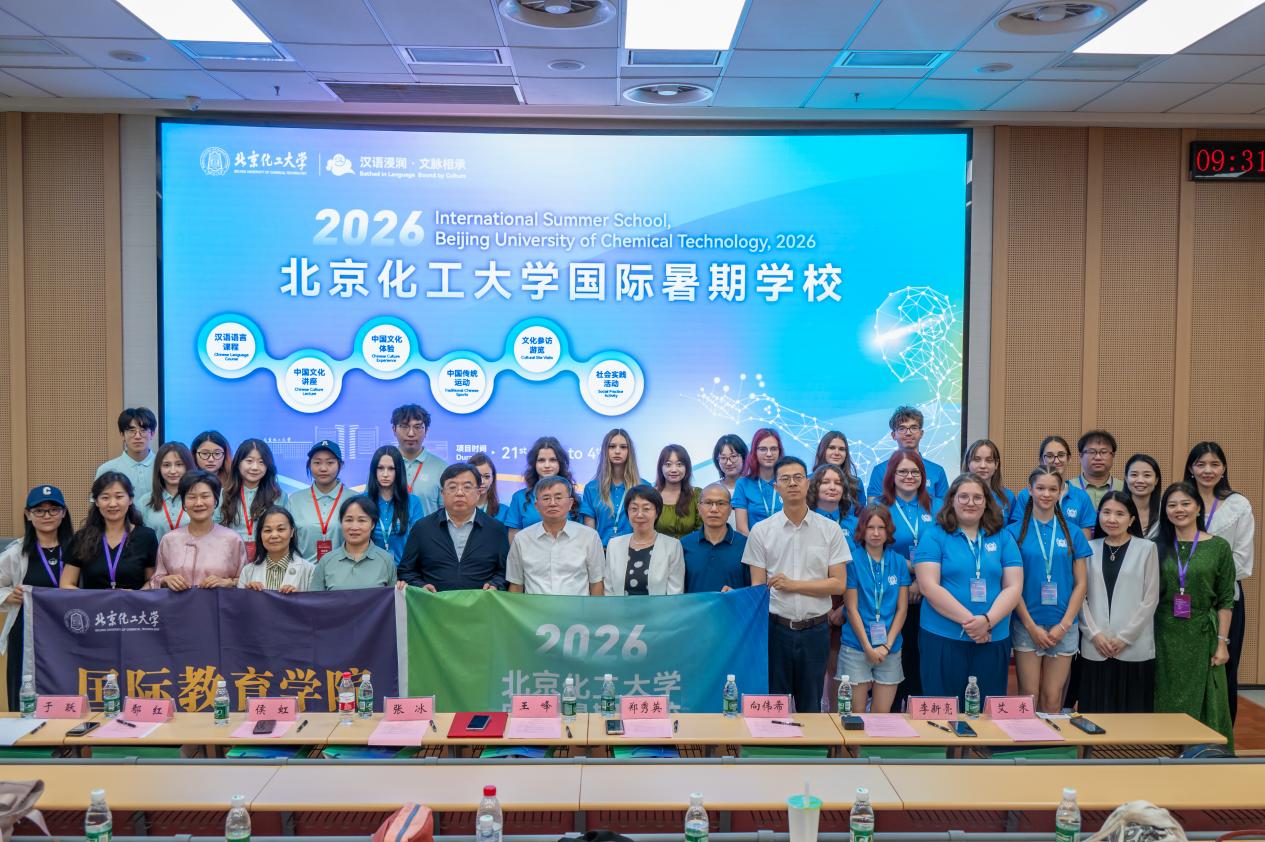
The year 2026 marks the 77th anniversary of the establishment of diplomatic relations between China and Hungary. Guided and supported by the Center for Language Education and Cooperation, this Chinese Bridge Summer Camp stands as a vital initiative through which BUCT contributes to China’s national strategy of people-to-people exchanges and advances high-standard opening-up. It also constitutes a core component of the long-term partnership between the two universities, consolidating the fruitful outcomes of Confucius Institute development.
Looking ahead, Beijing University of Chemical Technology will continue to leverage the Confucius Institute as a premier platform, enrich international exchange programs, innovate cross-border educational channels, and deepen educational collaboration, cultural communication and youth exchanges between Chinese and Hungarian universities. Through consistent, substantial international engagement, the university strives to facilitate mutual learning between civilizations and foster enduring people-to-people connectivity across borders.